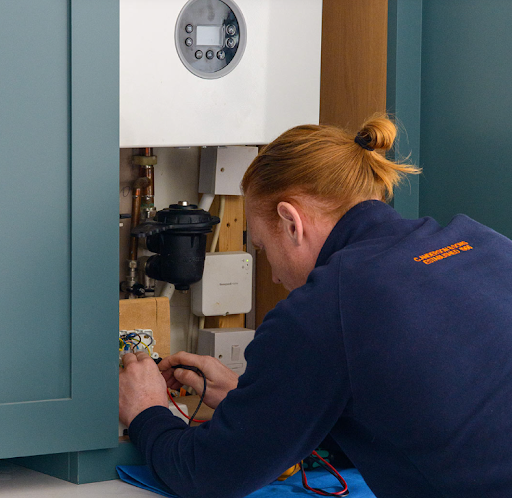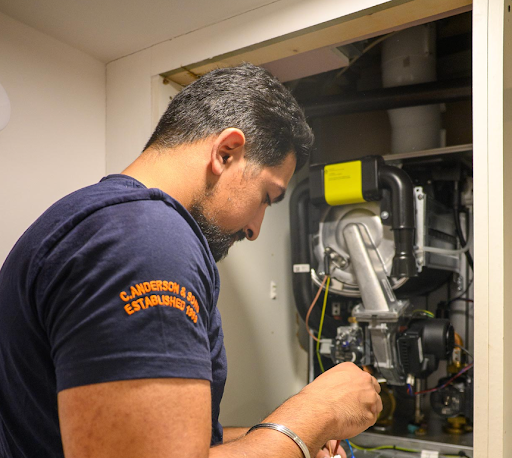
A boiler gurgling noise is often caused by trapped air, low water pressure, a frozen condensate pipe or restricted water circulation. Although occasional bubbling sounds may be harmless, persistent gurgling can indicate a problem with your central heating system that needs attention.
If your boiler is making a gurgling noise, identifying when the sound occurs can help narrow down the cause. You may hear bubbling when the heating starts, trickling while hot water is running or unusual noises coming from your radiators.
At C. Anderson & Sons LLP, we provide boiler repairs and servicing across London, helping homeowners, landlords and property managers investigate heating faults and restore reliable operation.
This guide explains the common causes of boiler gurgling, the checks you can safely carry out and when to contact a qualified heating engineer.
Why Is My Boiler Making a Gurgling Noise?
A boiler usually makes a gurgling noise because air or water is moving irregularly through the heating system. Trapped air can create bubbling sounds, while low pressure, restricted circulation or condensate drainage problems can also cause unusual noises. The exact cause depends on the boiler type, where the sound originates and when it occurs.
Your central heating system circulates heated water through pipes and radiators. When air collects inside these components, it can interrupt smooth circulation and produce gurgling or trickling sounds.
However, a gurgling boiler does not always mean trapped air is responsible. A faulty circulation pump, sludge accumulation or a blocked condensate pipe can produce similar symptoms.
Understanding the difference helps you decide whether a simple check is appropriate or professional diagnosis is required.
What Are the Most Common Causes of a Gurgling Boiler?
The most common causes of boiler gurgling include trapped air, low boiler pressure, frozen or blocked condensate pipes, sludge build-up and circulation problems. These faults affect how water or condensate moves through the heating system. Some can be identified through basic checks, while others require a Gas Safe registered engineer.
1. Trapped Air in the Central Heating System
Trapped air is a common cause of gurgling noises from radiators and heating pipes.
Air bubbles can collect inside radiators and interrupt the normal movement of heating water. You might notice:
- Gurgling noises from radiators.
- Radiators that are cold at the top but warm at the bottom.
- Bubbling sounds when the heating starts.
- Uneven heating between rooms.
Bleeding radiators may release trapped air and restore more even heating. However, if air repeatedly enters the system, a heating engineer should investigate the underlying cause.
2. Low Boiler Pressure
Low boiler pressure can interfere with normal heating circulation and may contribute to gurgling sounds, poor radiator performance or boiler shutdowns.
Many sealed domestic heating systems operate at approximately 1–1.5 bar when cold, although the correct pressure depends on the manufacturer and model.
Check the boiler’s pressure gauge against the recommended range in its manual.
If the pressure is too low, the system may require repressurising. However, repeatedly losing pressure can indicate a leak, faulty expansion vessel or pressure relief valve problem.
3. Frozen or Blocked Condensate Pipe
Modern condensing boilers produce condensate during normal operation. This liquid drains away through a condensate pipe.
During freezing weather, an exposed external condensate pipe can freeze, preventing condensate from draining correctly.
Possible symptoms include:
- Gurgling or bubbling sounds.
- Boiler fault codes.
- Heating or hot water stopping unexpectedly.
- Problems developing during particularly cold weather.
A frozen condensate pipe may be thawed using warm, not boiling, water where the manufacturer’s instructions permit and the external pipe is safely accessible.
Never dismantle the boiler or attempt to clear internal condensate components yourself.
4. Sludge or Limescale Build-Up
Central heating sludge often contains magnetite, a dark substance formed through corrosion inside heating systems.
Over time, sludge can accumulate in radiators, pipes and other components, restricting water circulation.
Limescale can also form on heating surfaces, particularly in hard water areas.
Restricted water flow may cause gurgling, rumbling, whistling or kettling noises. Other warning signs include cold radiator patches and slow heating.
A heating engineer can assess whether a chemical flush, power flush or component repair is appropriate.
5. Faulty Circulation Pump or Restricted Water Flow
The circulation pump moves heated water through the central heating system.
If the pump becomes faulty, airlocked or obstructed, water may not circulate correctly. This can produce unusual sounds and leave radiators heating unevenly.
Pump problems may also cause humming, buzzing or vibration rather than a typical gurgling sound.
A qualified engineer can inspect the pump, heating controls and system circulation to identify the fault.
Why Does My Boiler Gurgle at Different Times?
The timing of a boiler gurgling noise can provide useful clues about its cause. Gurgling when the heating starts may indicate trapped air or circulation changes, while noises during hot water use can relate to boiler operation or water flow. Continuous or unusually loud sounds deserve closer investigation.
Boiler Gurgling When Heating Starts
When central heating switches on, the circulation pump begins moving water through the system.
If air is trapped in the radiators or pipework, this movement can create bubbling or trickling noises.
Occasional sounds during start-up may not indicate a serious fault, but persistent gurgling should be investigated.
Boiler Gurgling When Hot Water Is Running
A combi boiler heats domestic hot water on demand.
If gurgling occurs when you open a hot tap, it may be associated with circulation, internal components or condensate drainage.
The sound alone cannot identify the fault. Note whether the boiler also displays an error code or struggles to maintain hot water temperature.
Boiler Gurgling When Switched Off
A boiler may make brief noises after heating stops as the pump continues circulating water or components cool.
However, continuous gurgling when the boiler is switched off is less typical.
Record how long the noise lasts and whether the pressure gauge changes.
Boiler Gurgling at Night
Gurgling at night may become more noticeable because the surrounding environment is quieter.
Heating schedules, overnight temperature changes or a boiler operating during colder weather may also explain when the noise occurs.
If the sound becomes louder or more frequent, arrange an inspection.
How Can I Safely Stop a Boiler Gurgling?
You may be able to reduce boiler gurgling by checking the system pressure, bleeding radiators or identifying an accessible frozen condensate pipe. However, the correct action depends on the cause. Always follow the manufacturer’s instructions, and never remove the boiler casing or attempt repairs involving gas, combustion or internal components.
Check the Boiler Pressure
Locate the pressure gauge or digital pressure display.
Compare the reading with the recommended range in your boiler manual, ideally when the system is cold.
If the pressure is below the specified level, follow the manufacturer’s repressurising instructions only if you are confident doing so.
Do not repeatedly top up a boiler that continues losing pressure. This may conceal an underlying fault.
Bleed Radiators to Release Trapped Air
If your radiators are gurgling and cold at the top, bleeding them may help.
- Switch off the heating and allow the radiators to cool.
- Place a cloth beneath the radiator bleed valve.
- Use a radiator key to open the valve slowly.
- Allow trapped air to escape.
- Close the valve when water begins flowing steadily.
- Check the boiler pressure afterwards.
Bleeding radiators can reduce system pressure, so further adjustment may be necessary according to the manufacturer’s instructions.
If you are unsure, contact a heating engineer.
Check for a Frozen Condensate Pipe
During freezing weather, inspect any safely accessible external condensate pipe for signs of ice.
If your boiler manufacturer permits it, apply warm water carefully to the frozen section.
Avoid boiling water, open flames or forceful attempts to remove ice.
If the blockage is inaccessible, keeps returning or appears to involve internal components, arrange professional assistance.
Avoid DIY Internal Boiler Repairs
Do not attempt to repair a circulation pump, heat exchanger, condensate trap or internal boiler components yourself.
These faults require suitable tools, technical knowledge and, where gas work is involved, a Gas Safe registered engineer.
Is a Gurgling Boiler Dangerous?
A gurgling boiler is not automatically dangerous. Trapped air or changes in water circulation can cause relatively minor noises. However, persistent gurgling accompanied by leaking water, repeated pressure loss, fault codes, overheating or loss of heating may indicate a more serious problem requiring professional assessment.
Stop using the boiler and seek appropriate assistance if you notice:
- Water leaking from the boiler or near electrical components.
- Repeated shutdowns or unexplained fault codes.
- Loud banging, overheating or significant changes in noise.
- Persistent pressure loss.
- A carbon monoxide alarm activating.
If you smell gas, follow the emergency gas safety procedure rather than attempting troubleshooting. In Great Britain, call the National Gas Emergency Service on 0800 111 999.
If a carbon monoxide alarm activates, leave the property, seek fresh air and contact the appropriate emergency service. Do not re-enter until it has been declared safe.
When Should I Call a Heating Engineer?
Contact a qualified heating engineer if your boiler continues gurgling after basic checks, repeatedly loses pressure, stops providing heating or hot water, or displays an error code. A professional can identify whether the problem involves trapped air, a circulation pump, a condensate blockage or another component.
During a boiler fault diagnosis, an engineer may:
- Check system pressure and inspect for leaks.
- Assess radiator and pipework circulation.
- Inspect the circulation pump.
- Investigate condensate drainage problems.
- Check for sludge or restrictions.
- Review boiler fault codes and manufacturer guidance.
The cost of a boiler repair depends on the fault, parts required, labour and accessibility.
A minor adjustment may be relatively straightforward, while replacing a circulation pump or repairing a heat exchanger can involve more extensive work.
- Anderson & Sons LLP provides boiler repairs in London, including emergency support for heating breakdowns. Our engineers assess the fault and explain the recommended repair before further work proceeds.
We serve customers across London, including Fulham, Chelsea, Putney, Barnes, Wandsworth, Battersea, Hammersmith, Kensington and Notting Hill.
Can Regular Boiler Servicing Prevent Gurgling Noises?
Regular boiler servicing can help identify developing faults before they cause more serious heating problems. During an inspection, an engineer can assess boiler operation, system pressure, safety components and visible signs of deterioration. However, servicing cannot guarantee that trapped air, sludge or circulation faults will never develop.
Annual servicing also helps maintain the boiler in accordance with manufacturer recommendations.
At C. Anderson & Sons LLP, our boiler servicing in London includes checks appropriate to the boiler model and its condition.
If your boiler has already developed persistent gurgling noises, a diagnostic repair appointment may be more appropriate than routine servicing alone.
Frequently Asked Questions About Boiler Gurgling
Is It Normal for a Boiler to Make a Gurgling Sound?
Occasional brief gurgling can occur during normal heating operation. However, loud, persistent or worsening noises should not be ignored, particularly if heating performance changes.
Why Is My Boiler Gurgling but Still Working?
Your boiler may continue operating despite trapped air, minor circulation restrictions or pressure fluctuations. Normal heating performance does not necessarily mean the underlying cause has disappeared.
Can a Gurgling Boiler Cause No Heating or Hot Water?
Yes. Low pressure, circulation faults and condensate blockages can sometimes prevent a boiler from operating correctly. A fault code may help an engineer identify the problem.
Will Bleeding Radiators Stop Boiler Gurgling?
Bleeding radiators can help if trapped air is causing the noise. It will not resolve a faulty pump, blocked condensate pipe or significant sludge accumulation.
Should I Repair or Replace a Noisy Boiler?
A gurgling noise alone does not mean your boiler needs replacing. The decision depends on its age, condition, repair costs, parts availability and overall reliability. Professional diagnosis should come before deciding on replacement.
Get Professional Help With a Gurgling Boiler in London
A boiler gurgling noise can be a minor circulation issue or an early warning of a fault requiring attention.
If checking the pressure or bleeding radiators does not resolve the problem, professional diagnosis can help prevent unnecessary repairs and further disruption.
At C. Anderson & Sons LLP, we provide boiler repairs, fault finding and servicing throughout London. Our Gas Safe registered engineers work on a wide range of boiler makes and models, with a repair-first approach where appropriate.
If your boiler is making unusual noises, contact C. Anderson & Sons LLP or call 0207 386 8888 to arrange an assessment.
Disclaimer: This article provides general information about boiler noises and basic household checks. It is not a substitute for manufacturer instructions or professional diagnosis. Gas appliance repairs and work involving gas components must only be carried out by appropriately qualified, Gas Safe registered engineers. If you suspect a gas leak or carbon monoxide emergency, leave the affected area and seek emergency assistance immediately.