Quick Answer: A boiler humming noise is often caused by the circulation pump, fan, vibrating components or restricted water flow. A quiet humming sound during normal operation is usually nothing to worry about, but loud, continuous or unusual humming may indicate a fault. If your boiler is vibrating, losing pressure or struggling to provide heating or hot water, contact a Gas Safe registered engineer to identify the cause and recommend suitable repairs.
A boiler humming noise is often caused by the circulation pump, fan, vibrating components or restricted water flow. A quiet hum during normal operation is not necessarily a problem, but a loud, continuous or unfamiliar sound may indicate a fault. Understanding when the noise occurs and whether your heating is working normally can help determine when professional attention is needed.
At C. Anderson & Sons LLP, we provide boiler repairs and servicing across London, helping homeowners, landlords and property managers identify heating faults and restore reliable heating and hot water.
Is It Normal for a Boiler to Make a Humming Noise?
A quiet humming noise from a boiler can be normal, particularly when the heating starts or hot water is being used. Circulation pumps, fans and other mechanical components produce operating sounds. However, humming that becomes noticeably louder, changes suddenly or continues unexpectedly may indicate a problem requiring investigation.
Modern gas boilers use several components that can generate low-level mechanical noise. A circulation pump moves heated water through the central heating system, while a fan in many gas boilers helps manage combustion air and flue gases.
A gentle humming or whirring sound during these processes is not automatically a fault.
You should pay closer attention when the boiler:
- Starts making a loud humming or buzzing noise.
- Vibrates noticeably against the wall or surrounding pipework.
- Hums continuously when it previously operated quietly.
- Produces unusual sounds alongside poor heating or hot water.
- Displays an error code or experiences repeated shutdowns.
A new boiler may also sound different from an older appliance because its components and operating sequences differ. However, a newly installed boiler that produces excessive vibration should be checked by the installer.
Why Is My Boiler Making a Humming Noise?
The most common causes of a boiler making a humming noise include circulation pump problems, fan faults, loose or vibrating components and restricted water flow. Some humming is simply part of normal operation, so identifying the cause requires considering the sound’s volume, location, timing and any changes in heating performance.
1. Faulty or noisy circulation pump
The boiler circulation pump moves heated water around the central heating system. If there is a faulty pump, an incorrect pump setting, worn pump bearings, or a restriction in the system, it may cause vibrating noises or a loud humming noise along with buzzing or droning sounds.
A boiler pump making a humming noise may also be associated with:
- Radiators heating unevenly.
- Reduced water circulation.
- Increased vibration around the boiler.
- Heating that takes longer than expected.
As the pump runs, worn pump bearings can increase vibration and noise.
A humming pump does not automatically need replacing. A professional heating engineer should assess whether the issue is the pump, pump bearings, pump setting, or a restriction elsewhere in the system.
2. Faulty boiler fan
Many gas boilers contain a fan that supports the safe movement of combustion gases through the flue system.
During operation, the fan motor may produce a gentle whirring or humming sound. However, worn bearings, mechanical deterioration or other fan problems can create louder or unusual noises, including whooshing noises.
A faulty boiler fan may also prevent the appliance from operating correctly because modern boilers use safety controls to monitor essential components.
Fan inspection and replacement should be carried out by an appropriately qualified professional, especially where fan-related or combustion faults could contribute to ignition failure.
3. Loose components and vibration
A boiler vibrating and humming may be experiencing mechanical vibration transmitted through its casing, mounting points or connected pipework.
Vibration can become more noticeable when components operate at particular speeds, and loose casing panels or brackets can amplify the boiler’s internal hum so it sounds louder outside the unit.
Possible sources include loose supports, vibrating pipes and mechanical components that are no longer operating smoothly.
Do not attempt to remove the boiler casing or tighten internal components yourself. A loud vibrating noise can point to loose mountings, while loud vibrating movement may indicate another internal vibration source that needs inspection by a qualified engineer.
4. Restricted water flow
Restricted water circulation can place additional demands on the heating system and contribute to unusual operating noises.
Potential causes include sludge in radiators, debris within the system, partially restricted pipework or circulation problems.
Limescale can also accumulate in heat exchangers, particularly in hard-water areas, and this build up in the heat exchanger can restrict flow and is a common cause of boiler kettling.
A kettling noise may present as a whistling sound, a whistling noise, a high pitched noise, or kettle boiling when water reaches boiling point inside the boiler.
It can also lead to banging noises or loud banging noises, with some boilers making loud banging noises as pressure increases within the boiler system.
If contamination is confirmed, an engineer may recommend cleaning, including a chemical clean, or other system maintenance.
5. Trapped air or pressure problems
Air in the system or air trapped in radiators can cause gurgling noises and other noisy operation. Bleeding radiators can remove trapped air and improve circulation. You can bleed them with a radiator key, and this should generally be done annually to help prevent gurgling noises.
Boiler pressure problems may accompany poor circulation, shutdowns or heating faults.
Check water pressure on the boiler’s pressure gauge after bleeding, because low pressure can also affect circulation.
Our guide to boilers that keep losing pressure explains common causes and when professional investigation is necessary.
Why Does My Boiler Hum at Different Times?
The timing of a boiler humming sound can help identify which components are operating and whether the noise is associated with heating, hot water or a shutdown sequence. A hum that occurs briefly during normal operation may be expected, while persistent noise or humming accompanied by reduced performance deserves closer attention.
Boiler humming when heating is on
When central heating is requested, the circulation pump moves heated water through radiators and pipework.
A low humming sound may therefore be normal.
However, loud vibration, poor radiator performance or unusual pump noise can indicate circulation problems or mechanical wear.
Boiler humming when hot water is running
A combi boiler heats domestic hot water when a tap or shower creates demand.
The boiler may activate its fan, burner and other components during this process.
If humming occurs only during hot water use, an engineer may investigate the components involved in that operating mode, including circulation arrangements and the diverter valve where fitted.
Boiler humming when switched off
Some boilers continue operating their pump or fan briefly after the heating demand ends. This can be part of a normal pump overrun or fan operating sequence.
However, a boiler humming continuously when apparently switched off may indicate a control issue or another fault.
Check whether the boiler is actually in standby and whether a heating or hot water demand remains active.
Boiler humming at night
A boiler humming at night may be responding to programmed heating, hot water demand or frost protection.
Quiet surroundings can also make ordinary mechanical noises seem louder.
If the sound is new, excessive or occurs without an obvious reason, arrange an inspection.
Is a Loud Humming Boiler Dangerous?
A loud humming boiler is not necessarily dangerous, so if you are wondering is a noisy boiler dangerous, the answer is not always immediately, but an unusual noise should not be ignored. Mechanical faults, poor circulation and failing components can affect performance or lead to breakdowns. A humming sound alone cannot establish whether a boiler is safe, and suspected gas or carbon monoxide emergencies require immediate action.
Even when heating and hot water still work, strange noises or excessive noise can point to faults.
Arrange prompt professional assessment if you notice loud vibration, repeated error codes, water leaks, sudden pressure changes or a loss of heating and hot water. A Gas Safe engineer should assess urgent safety concerns or unexplained internal faults.
If you smell gas, suspect a gas leak or believe carbon monoxide may be present, stop troubleshooting and follow official emergency procedures. In Great Britain, the National Gas Emergency Service can be contacted on 0800 111 999.
Never assume that a boiler is safe simply because it continues producing heat.
How Can I Stop My Boiler Humming?
The correct way to stop a boiler humming depends on the underlying cause, and broader boiler noises can point to different faults. Homeowners can safely observe the boiler’s behaviour, check accessible displays and identify when the noise occurs. If the boiler is making new or worsening sounds, note the type of noise before calling an engineer. However, pump repairs, fan replacement, internal adjustments and gas-related work require professional diagnosis rather than DIY experimentation.
Before contacting an engineer, you can make several useful observations.
Check the pressure gauge
Look at the boiler’s pressure display and compare the reading with the manufacturer’s recommended operating range.
For many sealed domestic systems, pressure is commonly around 1–1.5 bar when cool, although individual boiler requirements vary.
Do not repeatedly repressurise a system that keeps losing pressure without investigating the cause.
Check for error codes
Modern boilers may display fault codes when a component fails or operating conditions fall outside acceptable limits.
Record the exact code and consult the manufacturer’s instructions.
Avoid repeatedly resetting a boiler that continues to develop the same fault.
Note when the noise occurs
Identify whether the humming happens during heating, hot water use, start-up or shutdown, and note whether the sound is humming, whistling, banging, or gurgling.
Also note whether it is intermittent or continuous and whether the radiators heat normally.
These details can help a professional heating engineer narrow down the likely cause.
Look for visible problems
Without removing covers, check for visible leaks around accessible pipework, radiator valves or the boiler, and look for obvious blockages around accessible condensate outlets, vents or external flue areas where visible and safe to inspect.
If you notice leaking water, significant vibration or unusual operating behaviour, contact a qualified professional.
Do not dismantle the appliance, interfere with electrical connections or adjust internal components.
How Does a Heating Engineer Diagnose a Humming Boiler?
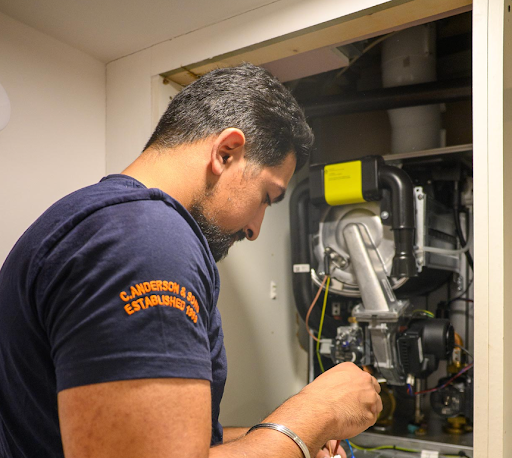
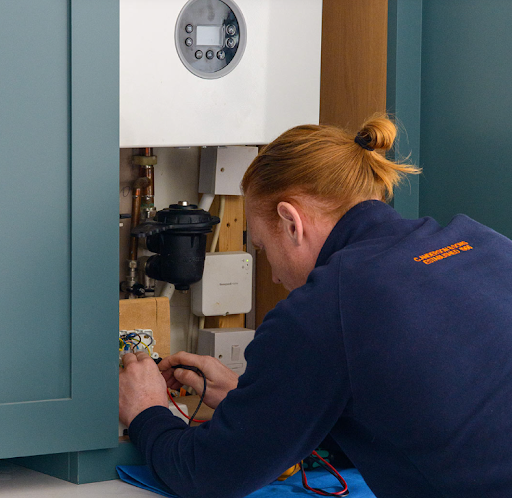
A heating engineer diagnoses a noisy boiler by checking the sound pattern, operating conditions, and the parts of the boiler system involved. Depending on the appliance, checks may include the circulation pump, fan, system pressure, heating controls, water flow and vibration sources. The objective is to identify the underlying fault before recommending repair or replacement.
An engineer may assess:
- Pump operation and circulation performance.
- Fan condition and relevant safety controls.
- Boiler pressure and fault history.
- Heat exchanger and system circulation issues.
- Heating pipework, supports and vibration.
- Thermostats, including a faulty thermostat, and other control components.
A qualified engineer can distinguish between a faulty pump, control fault, or circulation issue before recommending repair. Different symptoms require different solutions. Replacing components without identifying the actual fault can result in unnecessary expense.
How Much Does It Cost to Repair a Humming Boiler in London?
The cost of repairing a humming boiler depends on the fault, boiler make and model, replacement parts, labour time and accessibility. A minor vibration problem may require relatively straightforward attention, whereas a faulty fan, circulation pump or extensive system contamination may involve more substantial work. Left unresolved, noise issues can also increase energy bills if the boiler is running inefficiently.
Other factors affecting the final price include the boiler’s age, the availability of compatible components and whether emergency or out-of-hours attendance is required. For older boilers, repeated faults and expensive repairs do not always make them the most economical option to keep running.
At C. Anderson & Sons LLP, we recommend diagnosing the fault before deciding on the appropriate repair. This helps establish whether the problem can be resolved through adjustment, maintenance or component replacement.
You can discuss current labour rates and obtain further information about our London boiler services.
Should I Repair or Replace a Humming Boiler?
A humming boiler does not automatically need replacing. Many causes, including pump problems, vibration and some circulation faults, may be repairable. Replacement becomes more relevant when a boiler is frequently breaking down, has significant component failures, lacks available parts or is no longer economical to maintain.
A professional assessment should consider the boiler’s condition, repair cost, age, reliability and suitability for the property’s heating requirements. Repeated faults alongside high repair costs can make replacement the better long-term choice.
Our approach at C. Anderson & Sons LLP is to investigate repair options before recommending replacement where appropriate.
Regular boiler servicing in London can also help identify developing faults and support reliable operation.
When Should I Call a Boiler Engineer in London?
Contact a heating engineer when your boiler develops persistent or unusually loud humming, noticeable vibration, recurring faults or problems supplying heating and hot water. A qualified professional can assess whether the noise is part of normal operation or a symptom of mechanical wear, restricted circulation or another issue.
- Anderson & Sons LLP provides boiler repairs, servicing and emergency breakdown assistance throughout London.
From our Fulham base, we serve areas including Chelsea, Putney, Barnes, Wandsworth, Battersea, Hammersmith, Kensington and Notting Hill.
Our Gas Safe registered engineers work with major boiler manufacturers and can investigate unusual noises affecting gas boilers and other supported heating systems.
If your boiler has started humming, buzzing, vibrating or making unfamiliar noises, contact C. Anderson & Sons LLP or call 0207 386 8888 to arrange professional assistance.
Safety disclaimer: This article provides general information and is not a substitute for your boiler manufacturer’s instructions or professional assessment. Do not remove boiler casings or attempt internal gas or electrical repairs. Gas work must be undertaken by an appropriately qualified Gas Safe registered engineer. If you suspect a gas leak or carbon monoxide emergency, follow official emergency guidance immediately.